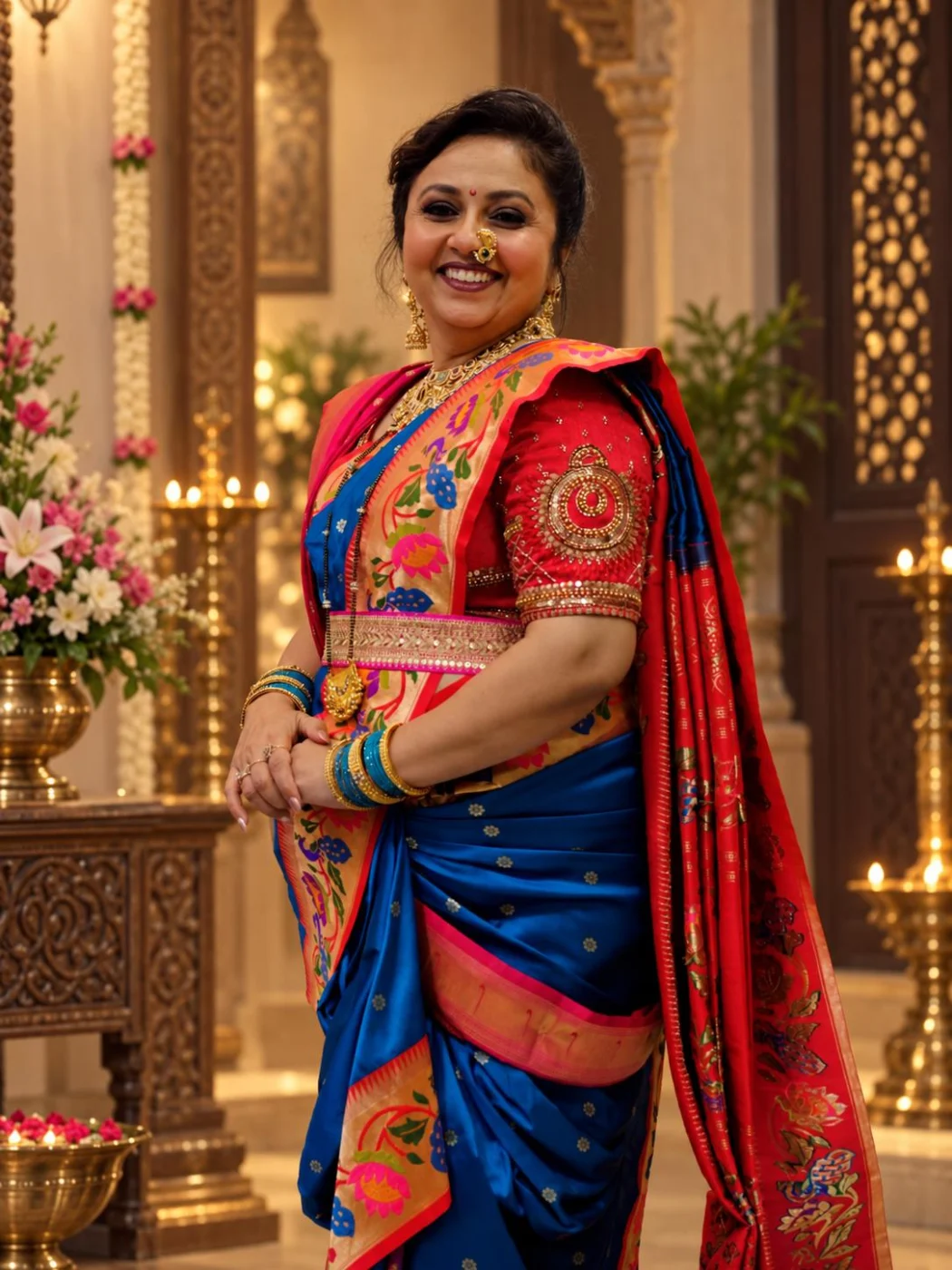
A Kulswamini Chronicle · Narrated by Shweta Bobde
The woven history
of Maharashtra.
Two thousand years on the banks of the Godavari, in five acts — history, people, craft, language, and legacy.
Act I · The Thread of Time
01
200 BC – 200 AD
The Satavahanas
Paithan — ancient Pratishthan — serves as the imperial capital. A golden age of Roman trade: Pliny records Indian imports costing Rome roughly ten crore rupees a year, much of it fine cloth from the Godavari basin.
years of weaving
weaving capitals — Paithan & Yeola
active looms in Yeola
hand-made, front to back
Act II · The People
Never the work of
one pair of hands
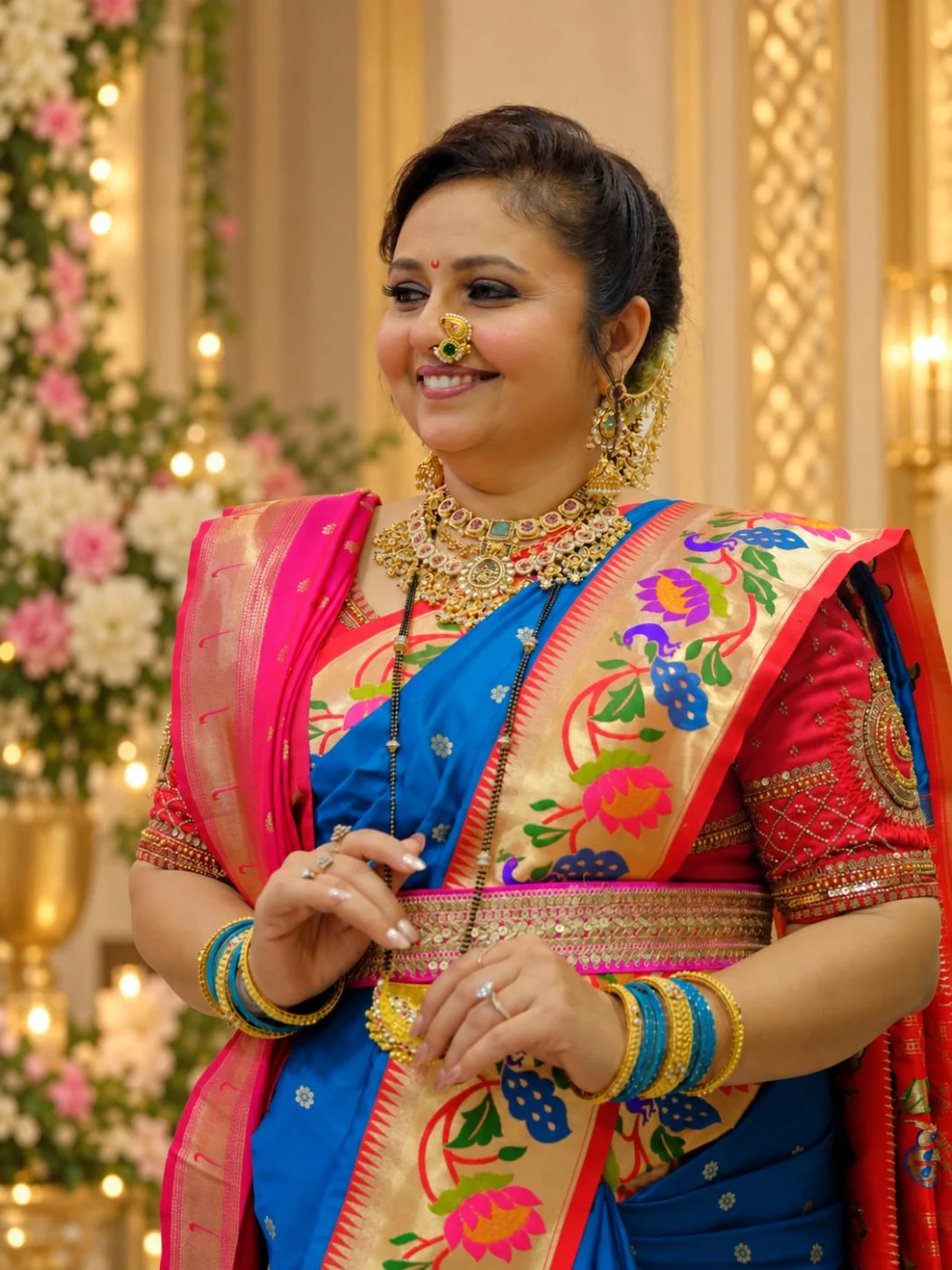
Behind every saree stands a web of hereditary communities — each with a name, a duty, and centuries of muscle memory.
Salis & Momins
The Weavers
The primary craftsmen. Salis are traditional Hindu weavers; Momins are skilled Muslim artisans who preserved the ancient brocade techniques.
Rangaris
The Dyers
Hereditary dyers — Hindu and Muslim — who originally specialised in natural plant-based dyes and indigenous herbs.
Patwegars
The Preparers
Artisans who prepare the silk for the looms and carefully wind the Kalabatu — gold threads — onto the silk.
Traders
The Core
Financiers and middlemen who procure raw silk from Bangalore and Surat, distribute it, and hold access to the market.
Paithan · The Ancient Cradle
On the banks of the Godavari River, Aurangabad district.
Yeola · The Commercial Hub
Nashik district — established in the late 17th century by Raghujibaba Patil.
Act III · The Making
From raw thread to royal fabric
Procurement
Sourcing Mulberry silk yarn from Bangalore and Surat, and Jari — gold and silver thread.
Bleaching & Dyeing
Cleansing the raw silk and applying colour — historically natural plant dyes prepared by the Rangaris.
Sizing the Warp & Weft
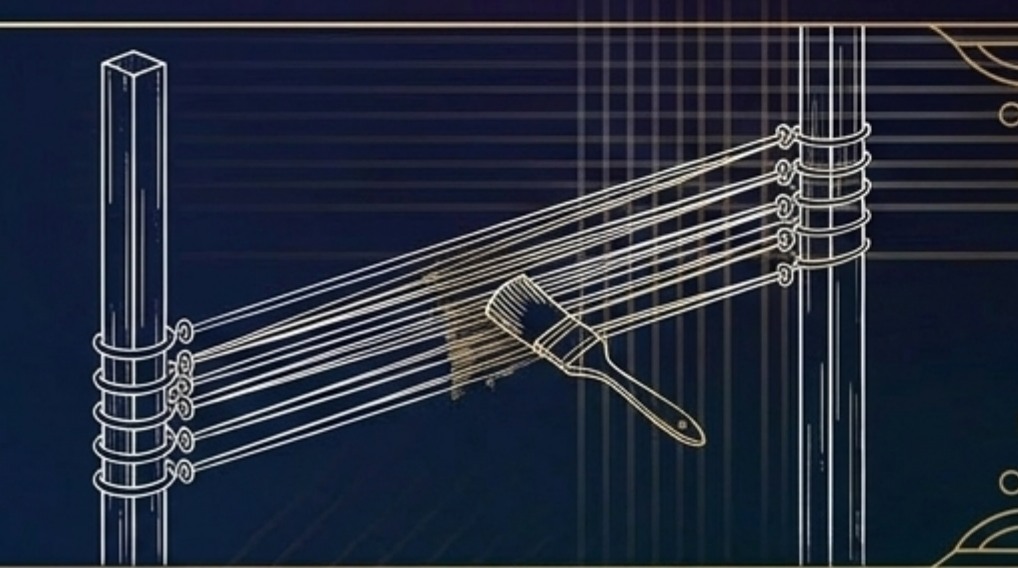
Stiffening the yarn. The warp is sized on eight-foot upright bars; the weft is sized seated, on a wheel.
Warping & Threading
Arranging thousands of threads meticulously to prepare the loom.
Weaving & Finishing
The painstaking manual interlocking of threads on the handloom — months of work for a single saree.
The Warp · the Tansala
Silk is sized on the tansala — a pair of eight-foot-high upright wooden bars. Yarn is passed through rows of glass rings, drawn tight, and stiffened by brushing with size.
The Weft · the Rahatkari
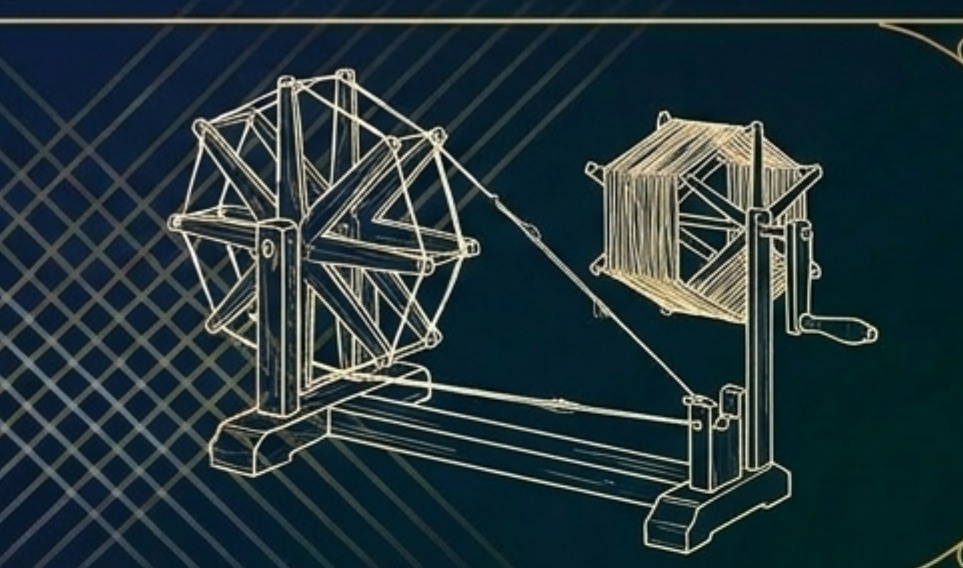
Sizing the weft is done seated. The silk is placed on a cage, moistened, and wound onto reels using a small wheel whose axle carries a specialised piece called the rahatkari.
Pavadya
Foot Pedals
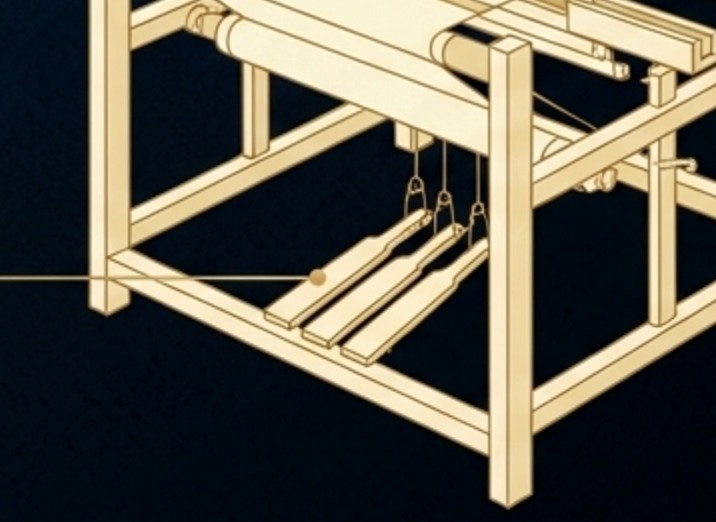
Two wooden boards worked by the weaver’s feet to control the vertical movement of the warp threads, creating the shed for the weft to pass through.
Turaee
Winding Mechanism
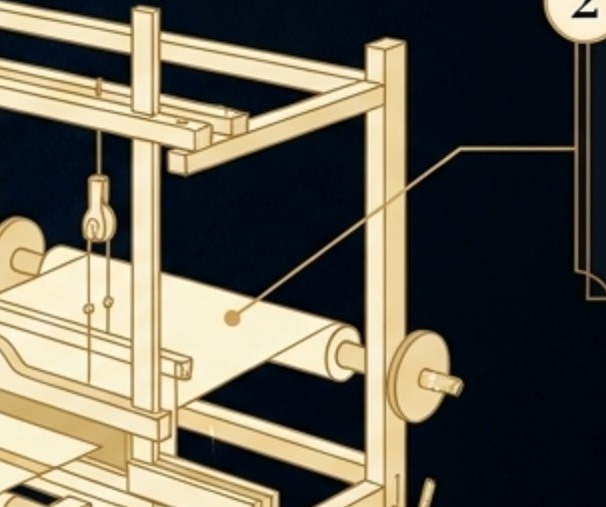
Rolls the finished cloth. Built in two distinct shapes — Round (Gol) and Square (Choukoni).
Damru
Tensioner
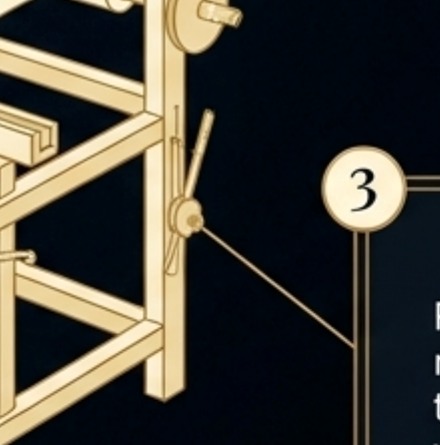
Maintains precise tension in the warp (Tana) throughout the weaving process.
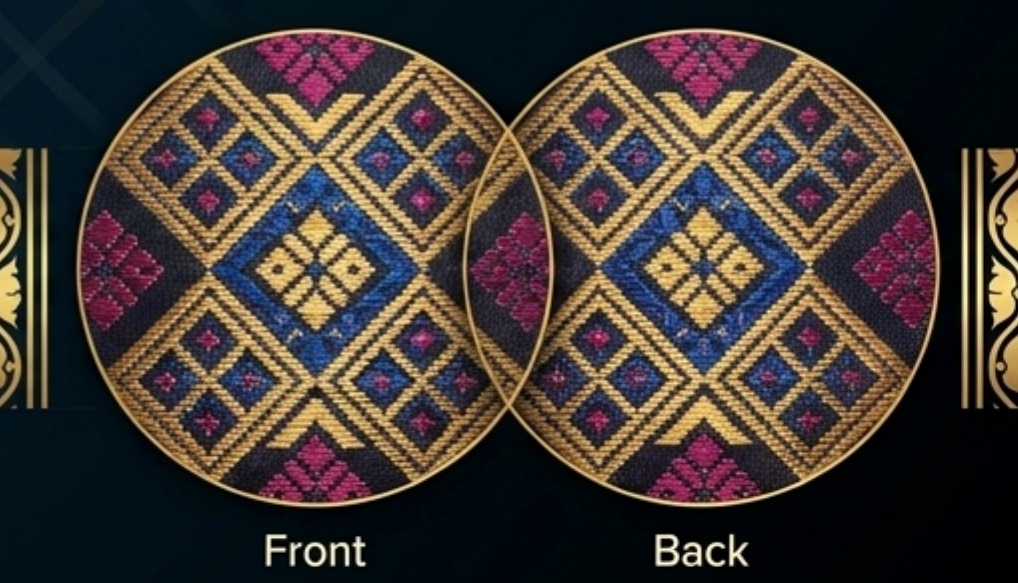
The hallmark of authenticity
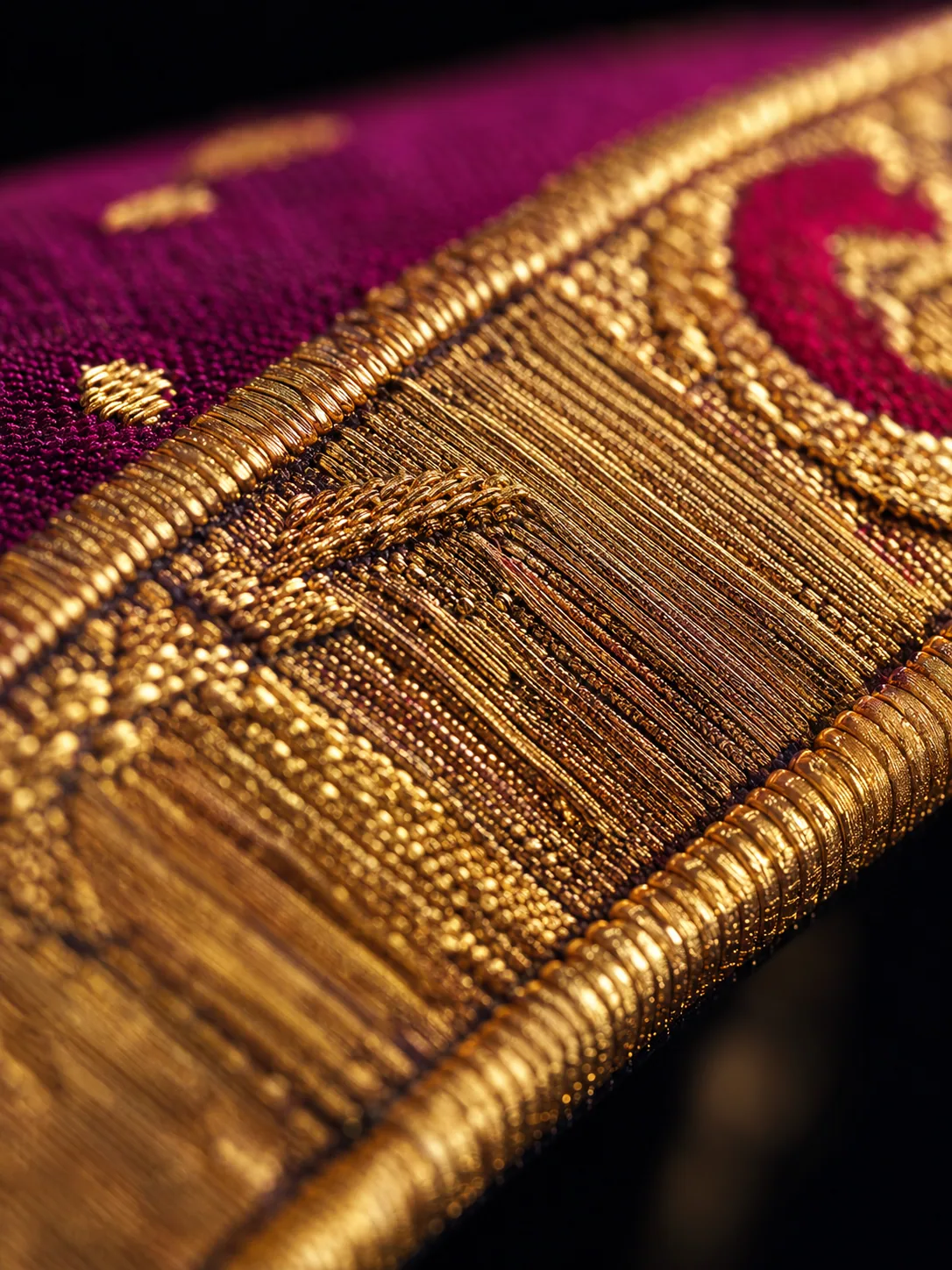
The Adhi interlock: front and back, absolutely identical.
The Adhi interlocking technique requires the weaver to manually interlock different coloured weft threads using multiple bobbins (kakdya). When changing colours, the new thread is literally hooked and interlocked with the old one. This painstaking manual process leaves no loose, floating threads on the reverse of the fabric. The front and back of a true Paithani border look absolutely identical — the ultimate proof of authentic handloom work, and what separates it from machine-made powerloom replicas.
Act IV · The Language
Reading the saree
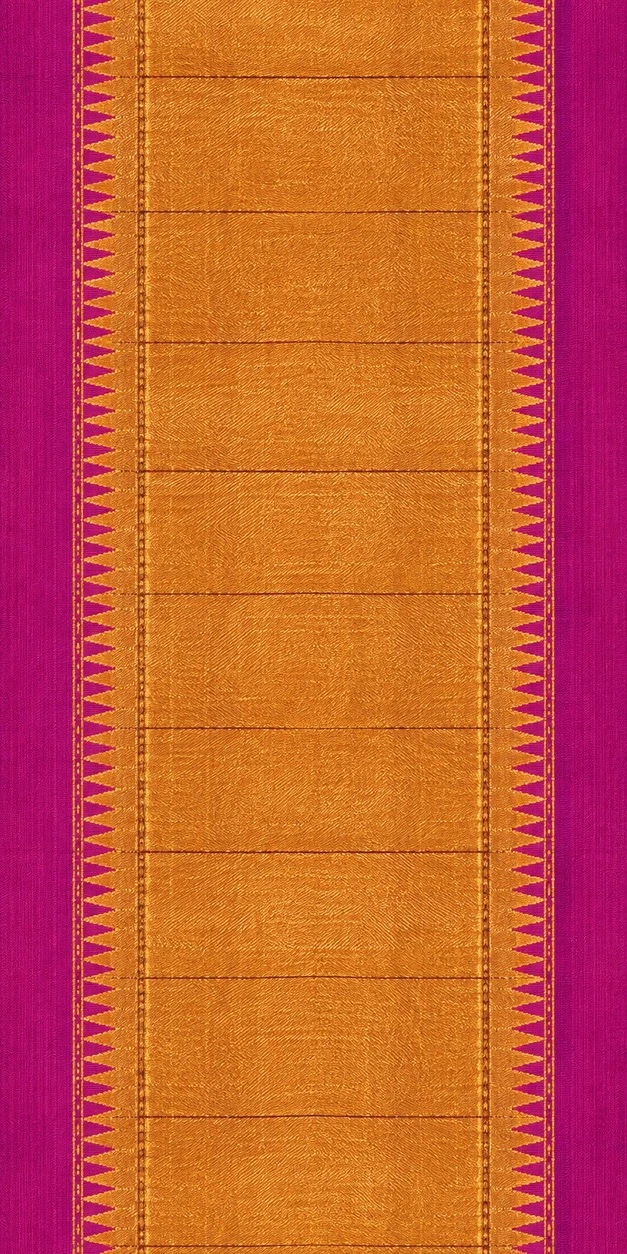
The Kath · Border
Woven with the Adhi technique. Often carries geometric or vine-like repeating patterns.
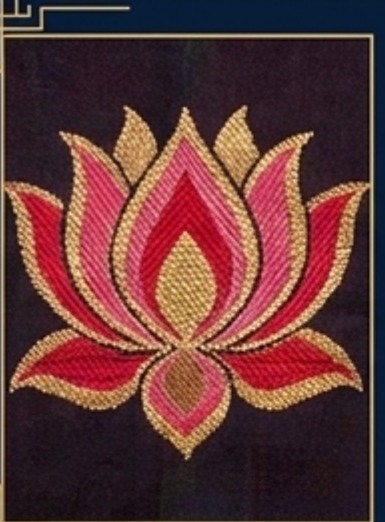
The Buttis · Body Motifs
Small, distinct sprigs — coins, stars — dotted across the main body against the solid silk colour.
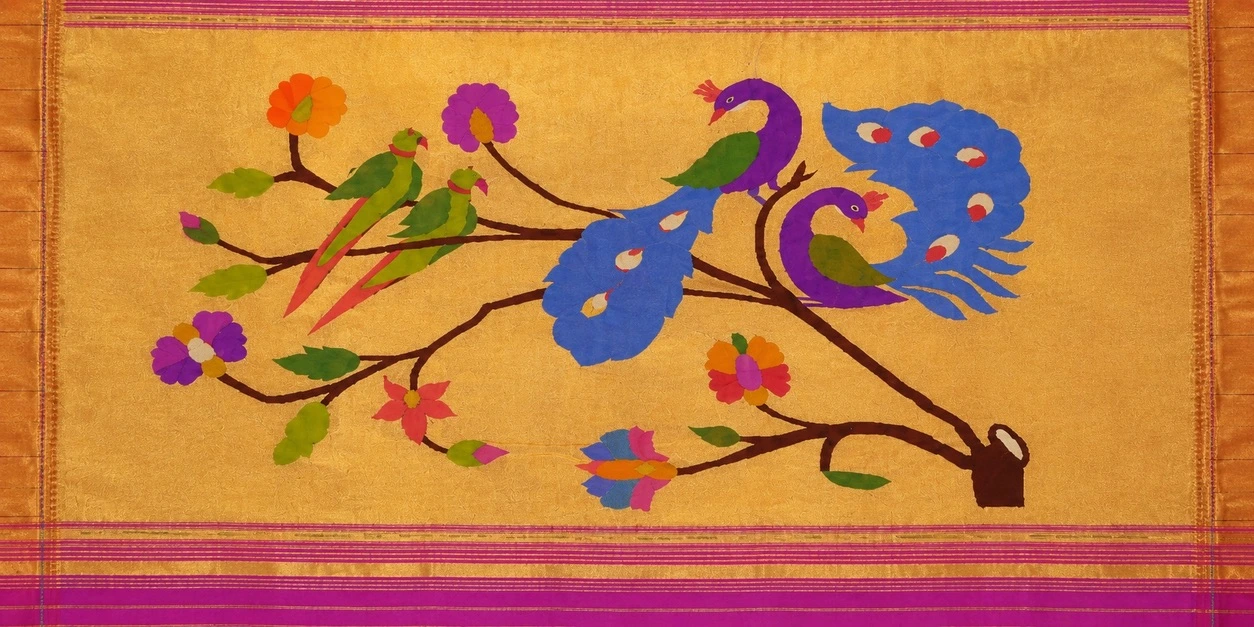
The Padar / Pallu · End Piece
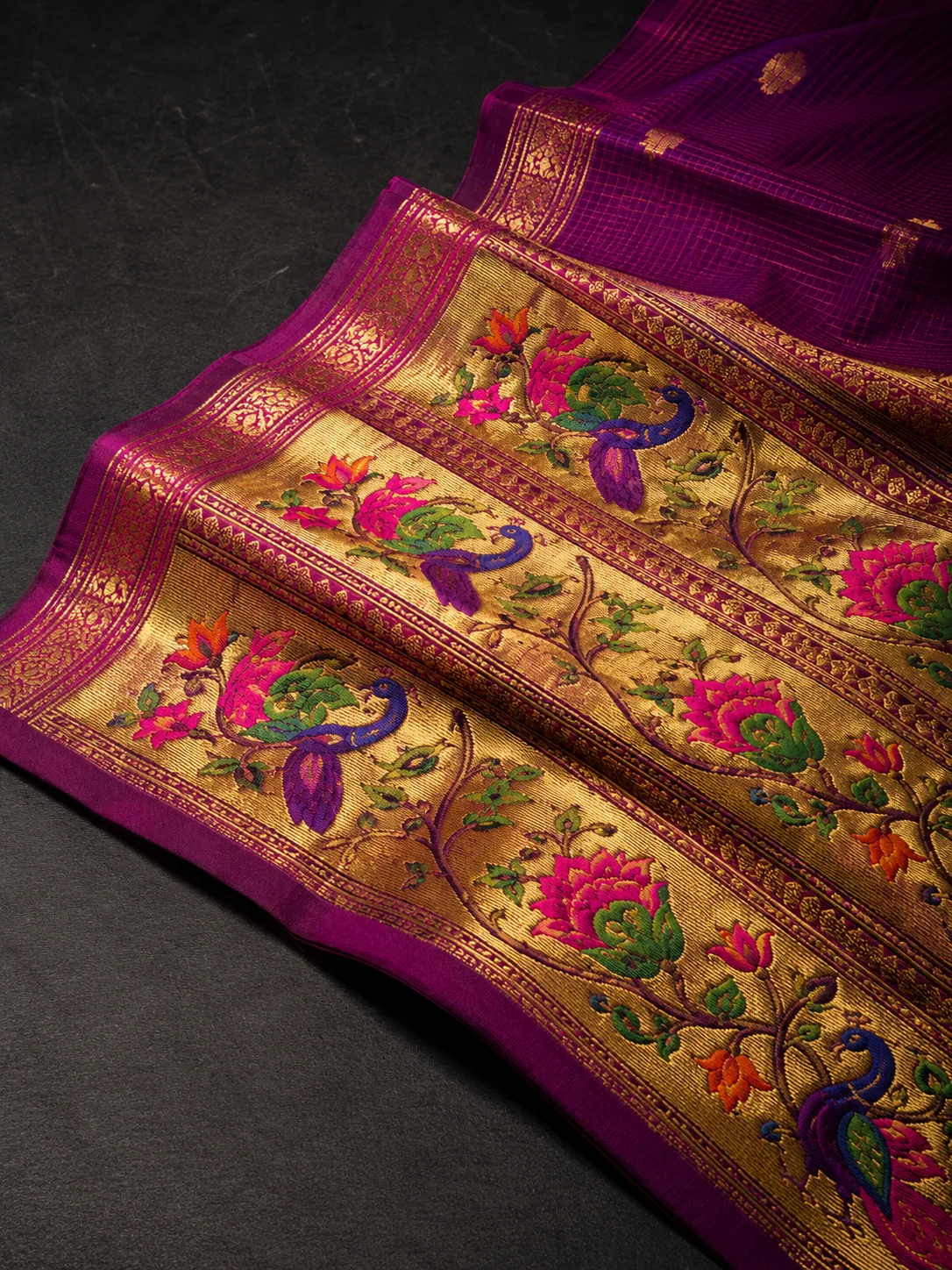
The grandest part of the saree, heavily ornamented with Jari and large, complex motifs — peacocks, lotuses.
The language of motifs
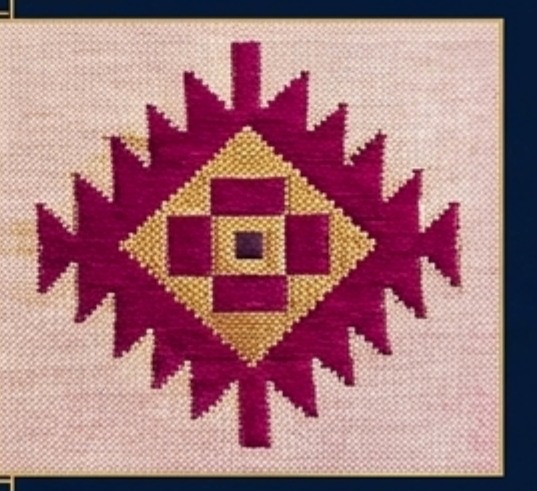
Narali Coconut
A geometric, stepped design traditionally used on the borders — the most recognisable Paithani border of all.
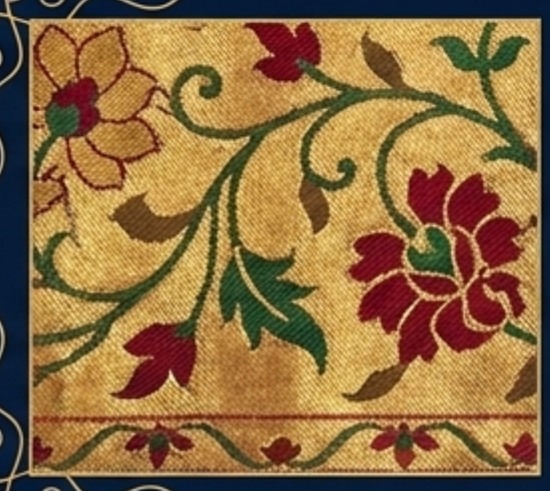
Asavali Vine
A flowing floral vine, highly favoured by the Peshwa rulers for its elegance.
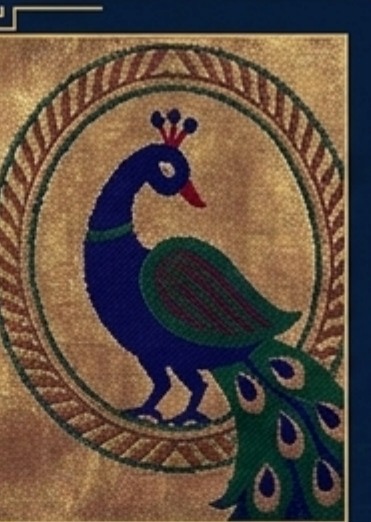
Bangadi Mor Peacock in a Bangle
A peacock woven inside a bangle shape, typically commanding the pallu.
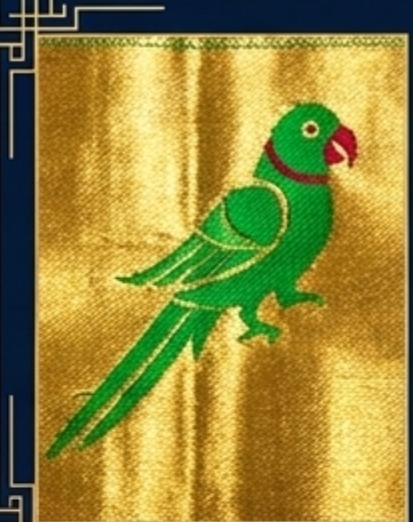
Muniya Parrot
The parrot motif, almost always woven in striking green silk.
Kamal Lotus
The traditional lotus flower, representing purity and beauty.
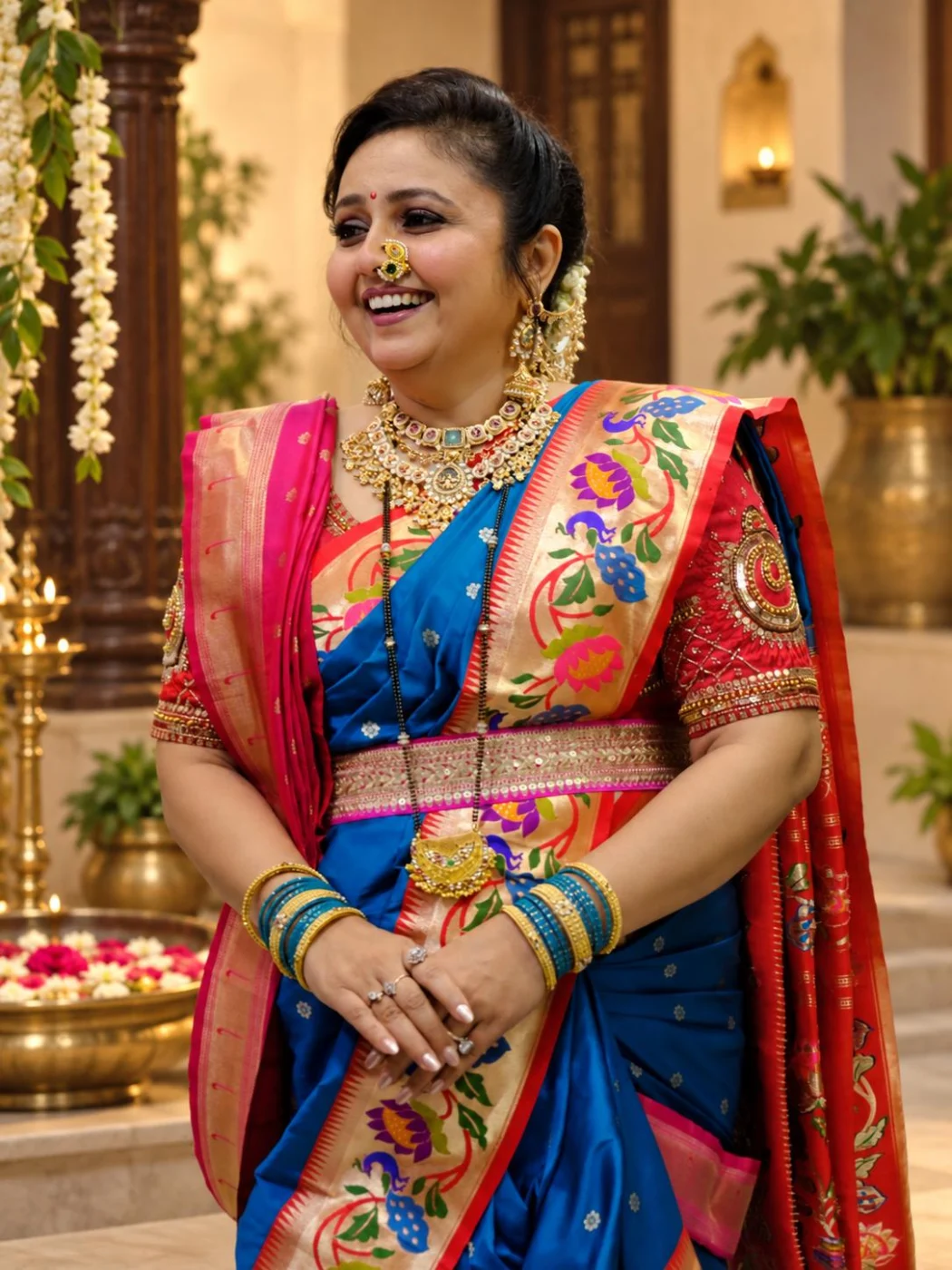
The heirloom grade
Brocade Paithani
Entirely hand-crafted — the most complex, heavily ornamented with intricate peacock and lotus motifs across the whole pallu. Months on the loom.
The classic grade
Traditional (Paratwali)
Defined by contrast: border and body woven in completely opposing colours, with traditional borders such as Narali.
The everyday grade
Ek-Dhoti Paithani
The fastest to weave and most accessible — a single uniform colour across the saree with minimal contrasting elements.
Act V · The Legacy
“Tantu tatam samvayanti samichi yajnasya pesho…”
Rigveda 2.3.6
Facing each other, they pull the horizontal threads and weave the beautiful garment of sacrifice.
For two millennia, the weavers of the Godavari basin have kept the rhythm of the loom alive. The Paithani is not just a fabric — it is the woven history of Maharashtra.